
Apart from being extremely local to Blackfen, my interest in Penhill was sparked because of the Friend family who lived there in the 1840s and 50s, and specifically an individual called Lovick Bransby Friend.
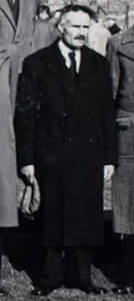
While researching my family history some years ago I discovered that my great aunt’s brother-in-law was present at the GPO in Dublin for the Easter Rising in 1916. Timothy Tyrrell had the strong belief that Ireland should be independent and he was one of the ‘Maynooth Fifteen’ who marched to Dublin in April 1916 to join the fight. He later fought in the War of Independence and the Civil War. Unsurprisingly, this was never talked about afterwards and it was lost to family memory.
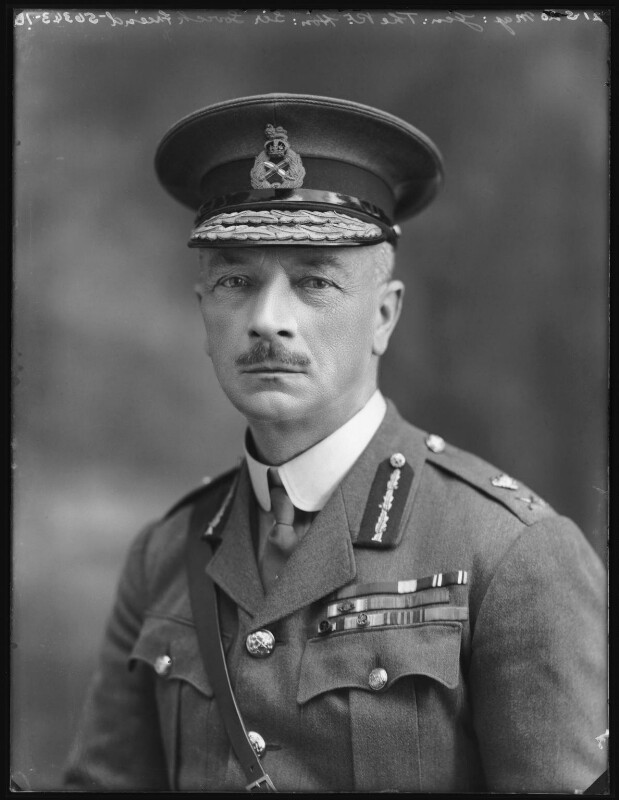
Irish history is something we are not taught about here in Britain, shamefully, and while I was finding out about what happened, I saw that the Commander-in-Chief of Ireland, appointed in 1914, was Major General Lovick Bransby Friend. Some online references state ‘Halfway Street, Sidcup’ as Friend’s birthplace which is wrong, but this intrigued me to find out more.
Lovick was born on 15 April 1856 and baptised on 27 June at Holy Trinity, Lamorbey. He was the son of Frederick and Fanny Friend who lived at Penn Hill. His father’s occupation according to the 1851 census was ‘ale and beer agent’. His eldest brother Frederick Tyrrell was baptised on 26 September 1849 and other siblings followed: William Beauchamp, Charles Arthur, Fanny Cooper, Ella Harriet, Edward Coke, George, Astley, Frances and Mary. Living with them in 1851 were a nurse, house maid, cook and groom who came from as far afield as Suffolk, Wiltshire and Devon. By the 1861 census the Friend family was living at Woolett Hall, North Cray (later renamed Loring Hall) and had added two footmen to their list of servants.
Lovick Bransby Friend had left the family home to receive his education at Cheltenham College (where he is shown on the 1861 census, aged 14), followed by the Royal Military Academy Woolwich. He was commissioned into the Royal Engineers, serving in Hong Kong, Egypt and Sudan and was showered with awards and medals.
As Commander-in-Chief of Ireland in 1916, following the arrest of Roger Casement for bringing weapons to Ireland, Major General Friend was satisfied that any danger had passed and went on leave to England. This was a grave error of judgement and when the Rising broke out on Easter Monday 24 April 1916, he was in London. He returned to Dublin but was replaced as Commander-in-Chief when Sir John Maxwell arrived on 28 April. Friend was quietly retired a few years later.
I was drawn to compare the two men, Timothy Tyrrell and Major General Lovick Friend. Timothy was a keen sportsman (hurling and football) as was Friend (cricket and football). But there the similarities end. Friend had lived a privileged life: his home, his education, freemasonry, his commission into the army, medals and a knighthood, and a comfortable retirement despite a huge error of judgement. Timothy Tyrrell was born in a tiny old cottage in the poor end of the town of Maynooth in Co. Kildare, Ireland. As a Catholic, his family and neighbours had suffered centuries of repression from the British. He felt so strongly that he was prepared to risk death for his belief in Irish independence. While he was eventually released from prison (and narrowly missed death by hanging) he was ostracised and unable to find work afterwards, and it was only very recently that the men and women who took part in the Rising were seen as ‘heroes’. There is now a memorial to the Maynooth Fifteen in the town’s square.
In a strange twist, Major General Lovick Friend’s mother’s maiden name was Tyrrell, and her grandfather and brother were both named Timothy Tyrrell.
My great aunt Lizzie moved to London to find work when her husband (Timothy’s brother, Jack) died in Ireland in 1943. Her sister – my grandmother – spent the last years of her life in Blackfen, just 10 minutes’ walk from Penhill where Lovick Friend was born. Life is full of coincidences!
 Blackfen Past and Present